Article: A Brief History of Fidgeting
A Brief History of Fidgeting
Keeping our hands busy is nothing new.
Long before fidget toys had a name, people were already finding small ways to keep their hands moving.
For centuries, beads, stones and other small objects have passed through our fingers - for meditation, relaxation, rhythm or simply to pass the time. Greek komboloi, or worry beads, are one example: an everyday object made to be handled, moved and repeated.
From habit to object
Most fidgeting, of course, never needed a special product.
Spinning a pencil. Clicking a pen. Bending a paperclip. Tapping your fingers on the table.
Eventually, designers started turning these everyday habits into objects of their own - from stress balls and tactile toys to the fidget spinner, which became a worldwide phenomenon in 2017.
The spinner craze disappeared almost as quickly as it arrived.
Fidgeting didn’t.
Fidgets grow up
Today, fidgets come in countless forms: rings, rollers, cubes, magnetic objects and tactile designs.
And they don’t necessarily have to look like toys. They can be quiet, minimal and beautifully designed - objects made to live on your desk, stay in your pocket and become part of everyday life.
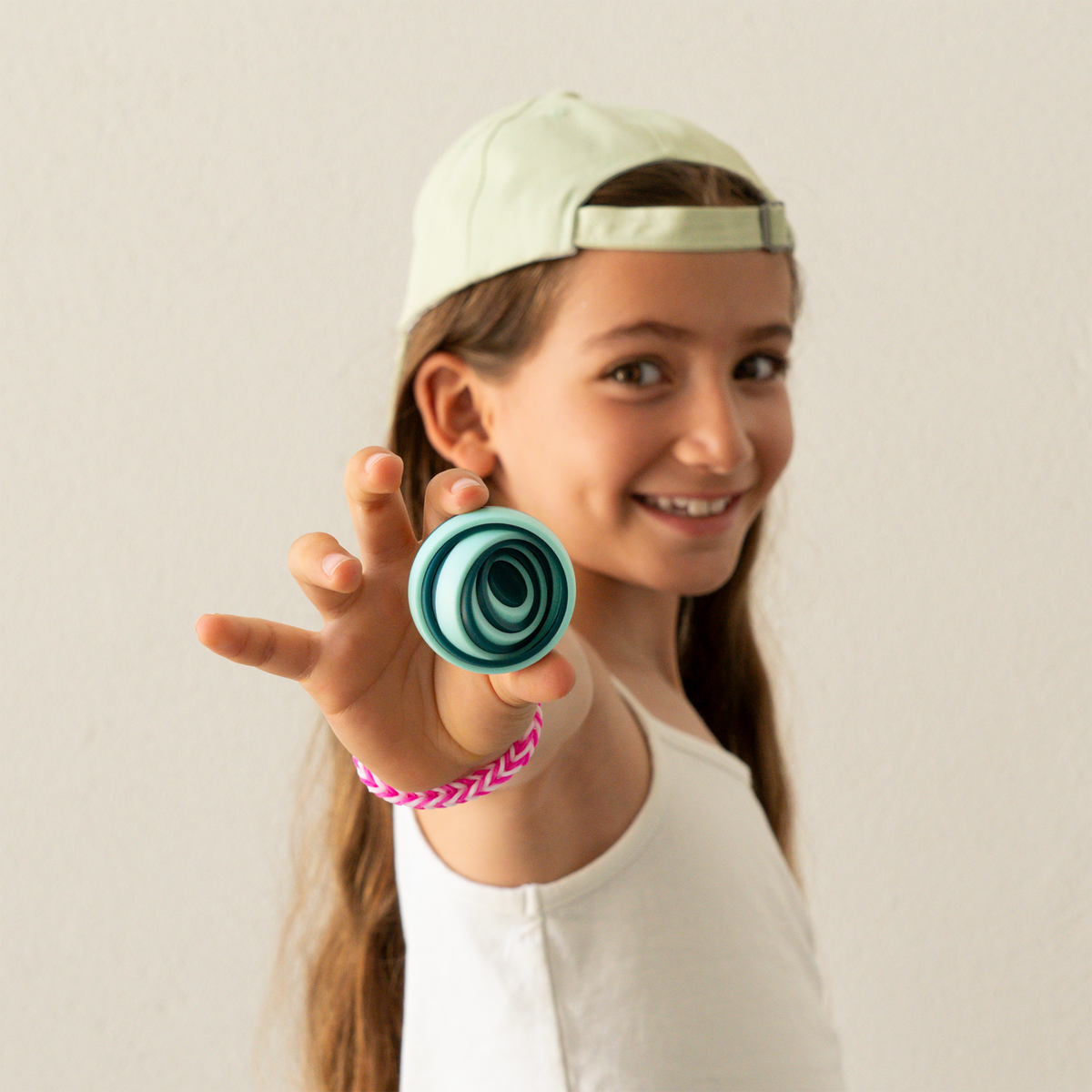
That same idea led us to HOOPS.
Seven rings. A simple movement. Endless small variations.
Something to turn, rearrange and return to - simply because sometimes, movement feels good.
Maybe fidgeting was never really a trend.
We’ve been doing it all along.